
Presence and motion detection
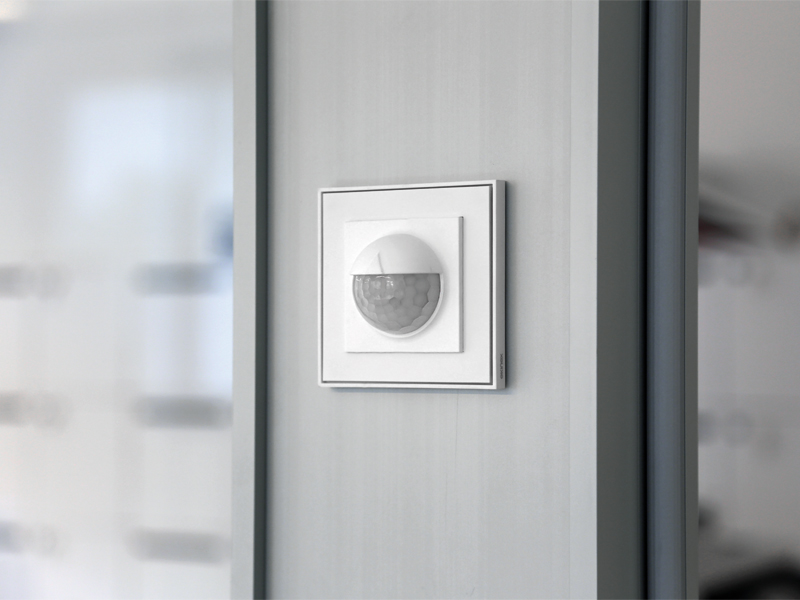
Presence sensors are commonly used controls to automatically switch luminaires on and/or off in a large number of different applications. They offer energy savings and increased comfort of use in the building and can also be used to detect simple movement in transit areas.
They can be used multifunctionally to control heating, cooling and ventilation systems as well as lighting. Versions equipped with a light sensor allow the lighting to be controlled according to available daylight.
Presence and motion detection
Motion and presence detection is widely used to implement a range of automations not only in lighting but also for heating, air conditioning, ventilation, air renewal and other building functions where manual or timed control alone is inefficient in terms of energy or uncomfortable for the end user.
For lighting, it proves to be a simple and effective control method that can be an alternative or complement to manual control, with positive effects on user comfort, energy savings - and consequently on limiting polluting emissions - and extending the life of light sources and other electronic components in luminaires.
Motion and presence
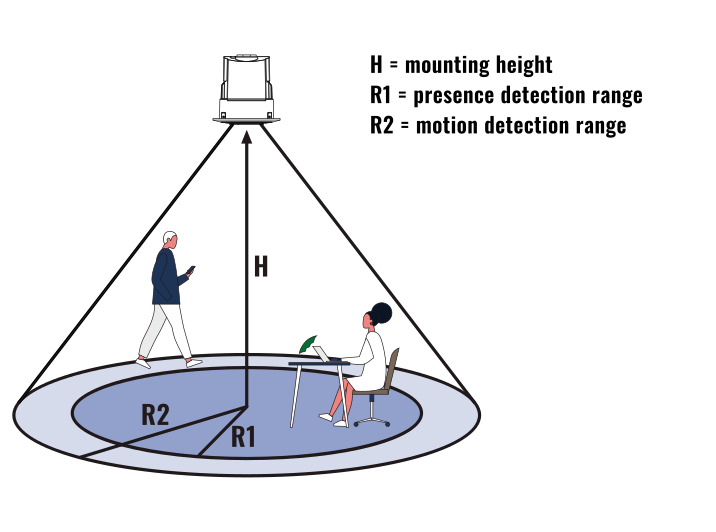
There is no single definition to differentiate between motion and presence sensors; two fairly common criteria take into account the application to be implemented and the detection capability of the device.
Motion detection is generally required in those environments where there is little or no natural light and lighting is needed for a limited period of time: these can typically be passageways such as corridors or stairwells, underground passages, common parts of basements, accesses to warehouses or garages; but also pedestrian routes outside the building during the evening and night hours.
Presence detection is used in environments where there is plenty of daylight and activity is carried out for extended periods, with the possibility of interruption at times that cannot be determined in advance, and therefore not suitable for management with a timer: for example, work and production environments, classrooms, meeting rooms or transit areas where there is plenty of daylight. Compared to simple motion detectors, presence detectors have a higher resolution optic and are able to detect even small movements in a limited area of the detection field: e.g. the operation of a mouse or keyboard by a person sitting at their workstation.
Passive infrared technology
For building automation applications, most motion and occupancy sensors use passive infrared (PIR) technology for detection, which uses the thermal radiation naturally emitted by the human body. Sensors based on this technology do not emit any electromagnetic radiation, but merely detect changes in thermal radiation occurring within their detection range: hence the 'passive' attribute given to this type of sensor.
Features of Ekinex presence sensors

Sensing range
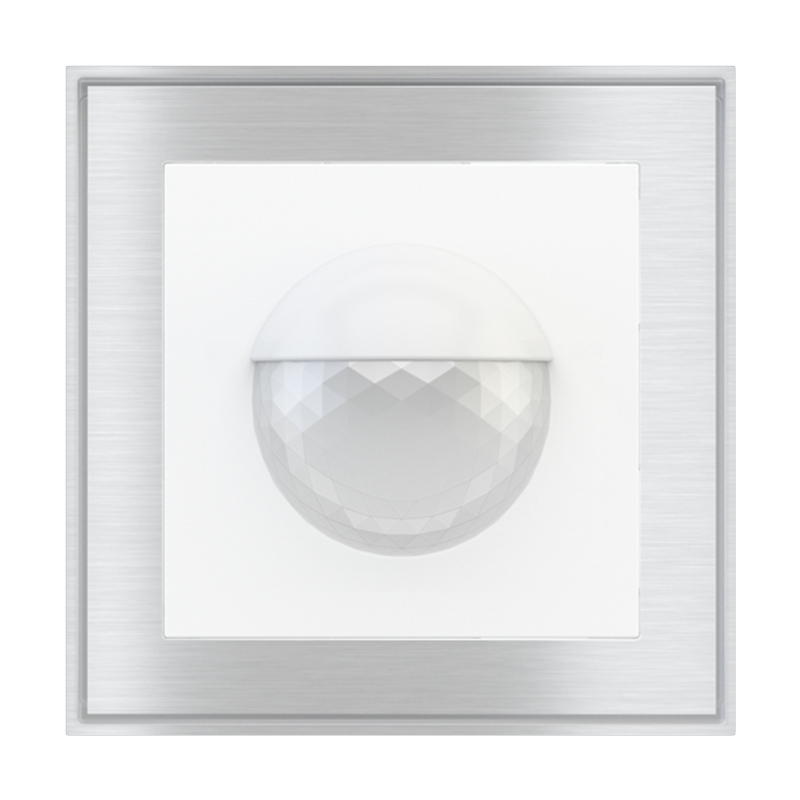
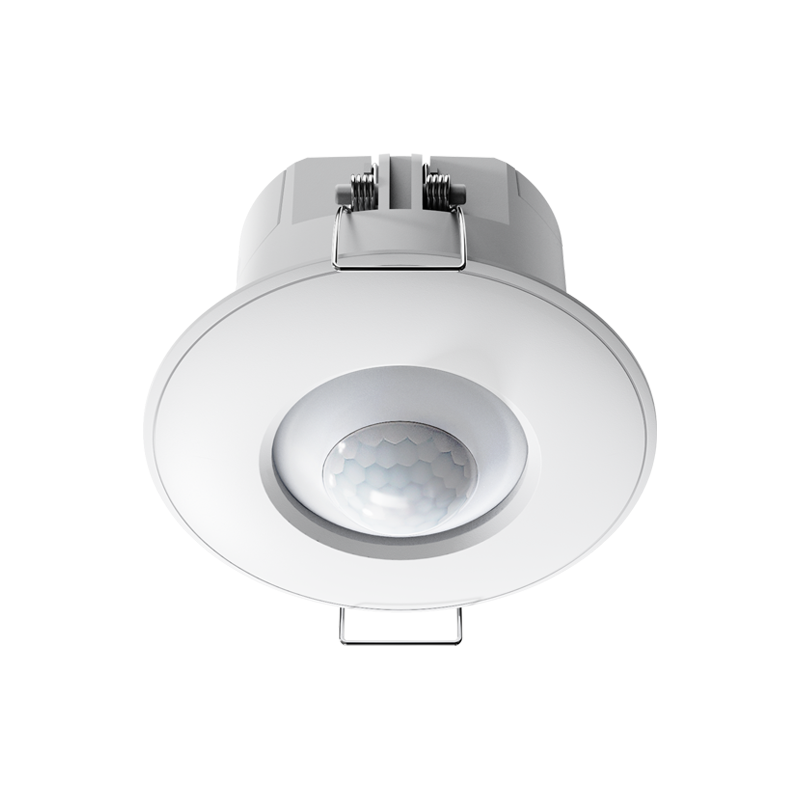
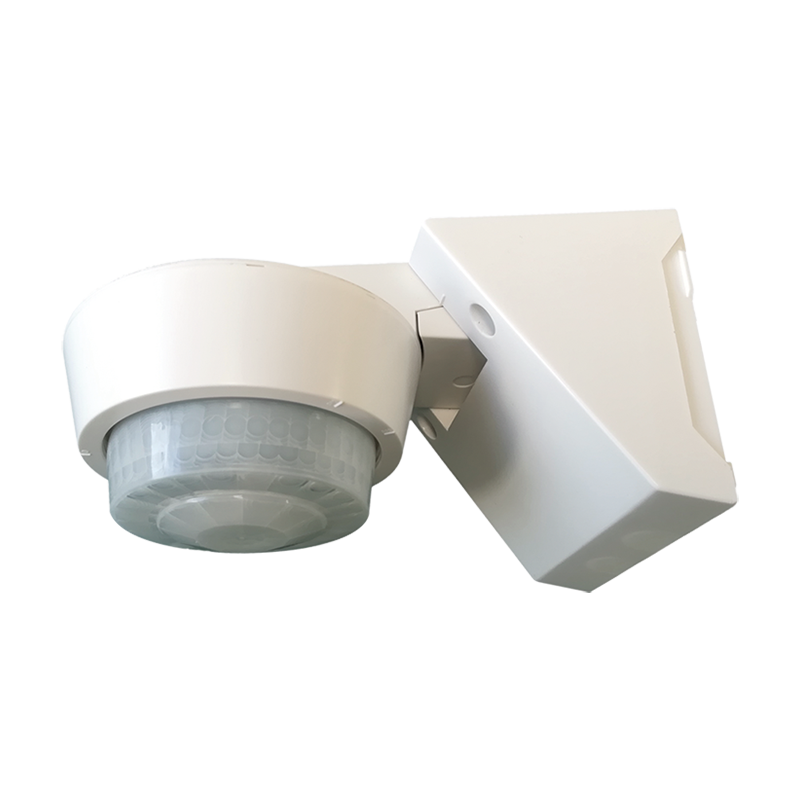
The shape of the detection field of presence sensors is usually 180° (semi-circular) or 360° (circular); the former is characteristic of wall-mounted sensors, the latter of ceiling-mounted sensors.


Automatic or semi-automatic operation
The presence sensors can be configured for automatic or semi-automatic operation.


Switch-off delay
The switch-off delay is set during sensor configuration and is the time interval between the last detected movement and the actual switch-off of the lighting.
Automatic control in standards
Appendix K of UNI CEN/TR 15193-2 defines automatic lighting controls activated by sensors that react to occupancy (presence and movement) and light level.


Daylight harvesting and constant illuminance control
A brightness sensor integrated in the luminaires enables constant brightness control in combination with luminaires equipped with dimmable sources.
Multifunctional use of sensors
The availability of several independent lighting control channels is particularly useful for rooms with multiple luminaires with different functions, e.g. basic/orientation lighting and main/accent lighting.

Are you designing an intelligent lighting project?
Get in touch with our technical team for KNX lighting sensor layout planning, DALI gateway integration and project consultancy.
Related Ekinex Solutions
Wall-Mounted Control Units
Italian design pushbuttons, touch controls, and room thermostats.
DIN Rail Modules for Lighting Control
Universal dimmers, 0-10V outputs, LED dimmer modules, and DALI gateways.
Actuators and Dimmers
KNX actuator and dimmer systems providing light intensity, hue, and colour adjustments in building automation.