


Features
KNX Standard
Ekinex® is developed on the base of the KNX standard, a system conforming to national, European and international standards.


Networking the installation
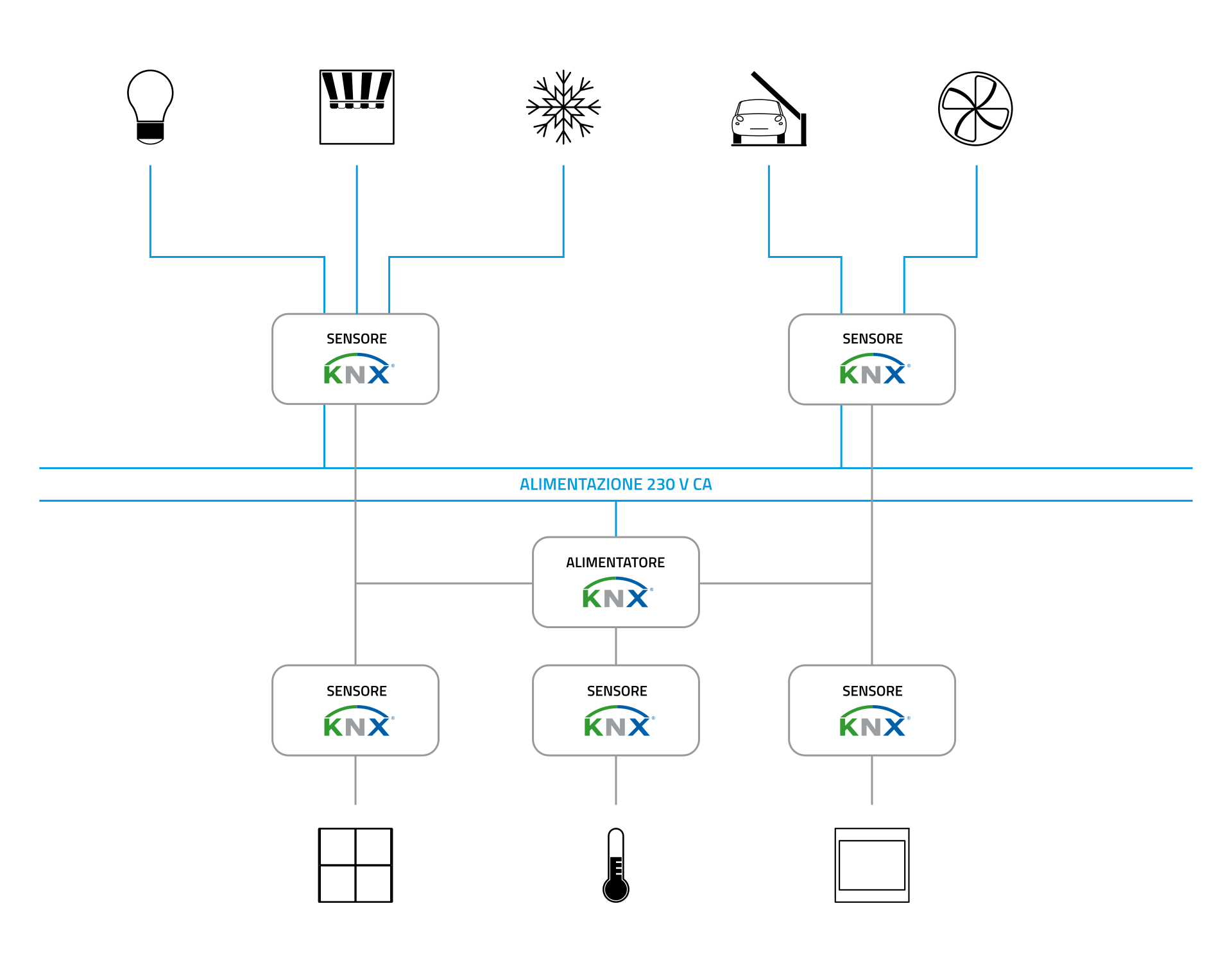
Unlike traditional installation, in a home automation system only actuators and output devices need to be connected to the 230 vac power supply. Sensors, switches, controls, displays and other input devices work with the only connection to the bus network that is powered by SELV voltage. This results in a considerable simplification of the installation that is particularly advantageous. In residential buildings the wall ducts would be quickly saturated by the cables needed to carry out advanced functions through a traditional installation.
Scalability
When you decide to realize a home automation system, it is not necessary to implement immediately all functions. You can start with a set of basic functions and then complete your system step by step, according to your needs and budget. This is made easy by the native modularity of the home automation technology. The condition for this is to accurately plan in the design phase a full predisposition of the system. It means a very low additional cost, but offers remarkable advantages in the future. In fact, it allows the later expansion and completion of the system with minimal impact.

Flexibility
The needs of building users change often over time. In residential buildings the different stages of life and the evolution in the composition of the family require to change the use of the rooms and the functionality of the installation. In these cases the traditional installation reaches its limits. Only a system of home and building automation can be reprogrammed and expanded during its life in order to flexibly and quickly adapt to changing needs.
Energy efficiency
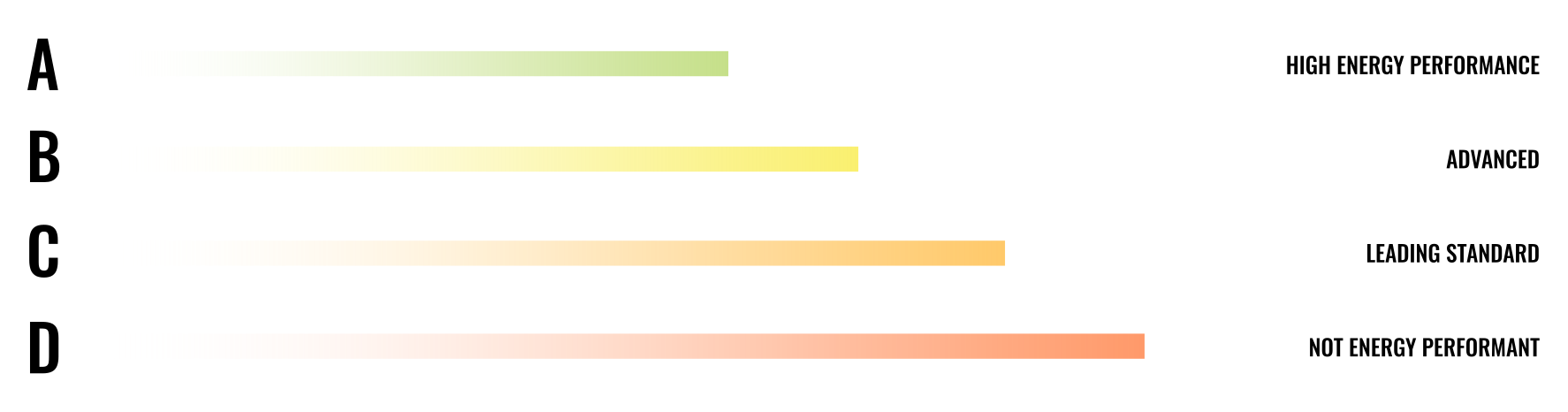
EN 15232 standardına göre otomasyon seviyesine dayalı 4 Enerji Verimliliği Sınıfı: Binaların enerji verimliliğinde otomasyonun katkısını belirleyen uluslararası standart.
Savings potentials for the heating technology function
Switching from class C to class A for residential buildings
Switching from class D to class A for residential buildings
Moving from class D to class A for commercial properties
Switching from Class D to Class A for offices
Versatility
Explore the 11 integrated technological functions managed by Ekinex home and building automation.


Lighting
Outdoor or indoor, basic or accent, technical or decorative; manual or automatic switching and dimming.


Heating
Precise thermoregulation at the level of single rooms or zones; exploiting solar radiation and time schedules.


Cooling
Coordinating air conditioning with shutters and shades to reduce heat load and conditioning power.


Ventilation
Ventilation management based on CO2 and humidity; coordinated with HVAC to prevent energy waste.


Shading
Automated shutters, blinds and curtains combined with weather stations for safety and glare control.


Socket Control
Cutting power to outlets to prevent hazards, reducing nocturnal electromagnetic pollution and managing load priorities.


Safety
SELV powered safe controls; integration of gas leak, flooding, air quality and wind alarms.


Scenarios
Coordinating all building installations with a single touch: leaving home, welcoming, cinema and panic scenes.


Information
From LED status feedback to touchscreens: graphical trends of physical values and early failure detection.


Meteorological Data
Detecting outdoor temperature, rain, wind speed and sun radiation to optimize HVAC and protect building exterior.


Energy Management
Collecting consumption data of heating, electricity and water; monitoring renewable production and energy balance.